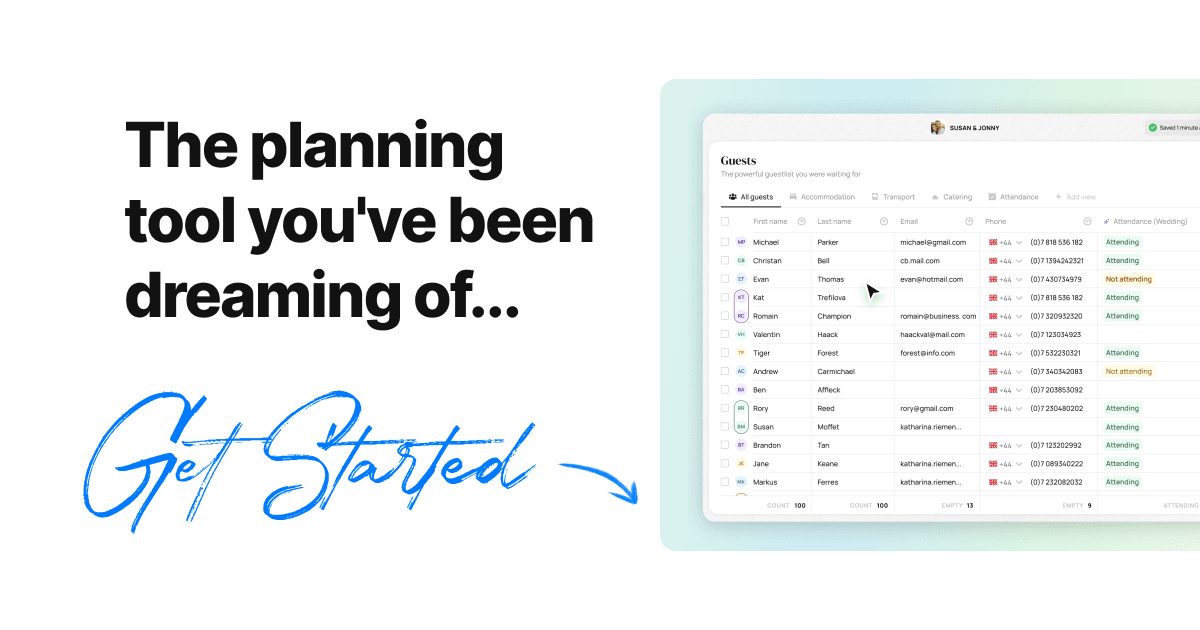
Most planners think of the wedding website as a guest-facing convenience: a place to post the schedule, collect RSVPs, and stop answering the same question 50 times by email. That’s true, but it undersells what the website actually does for the business behind it. Every wedding website a planner sends out is also a small, constant piece of marketing, quietly reaching people who were never on the guest list.
Every guest visit is a touchpoint you didn’t have to pay for
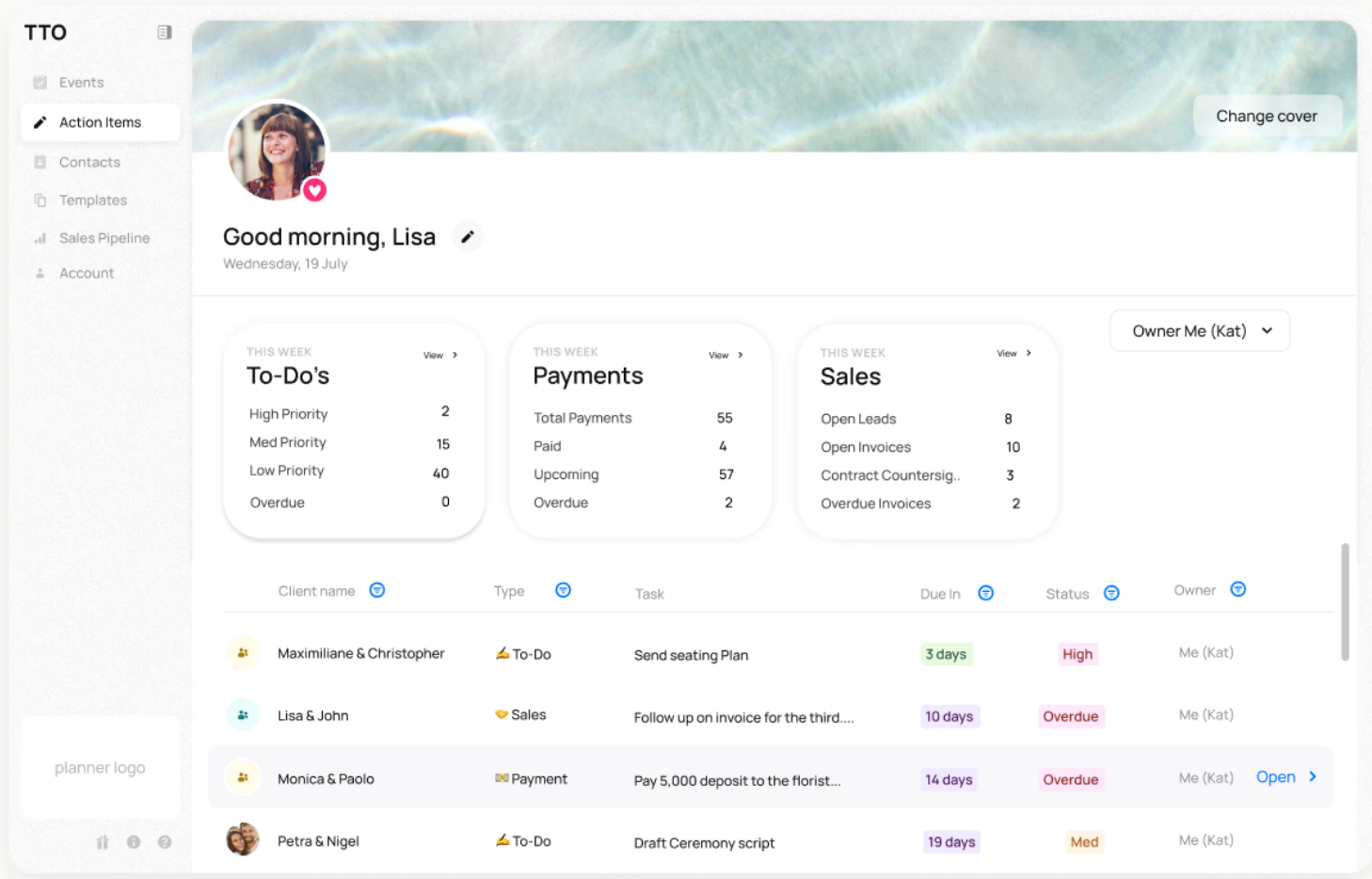
A wedding website naturally gets shared far beyond the couple. It goes into group chats, gets screenshotted into Instagram stories, gets forwarded to family members who couldn’t make the ceremony but want to see the details. Each of those visits is an impression, and if the site carries a planner’s branding, it’s an impression for the planner too. The free website that you can create with the Zankyou x That’s The One builds this directly into the Planner Logo section: the planner’s logo appears on every client website, giving each one a quiet referral engine at the bottom of every guest visit. A planner doesn’t need to ask couples to mention, tag, or link back to them. The exposure happens simply because the website exists and gets shared.
A shareable link is easier to spread than a PDF or a printed insert.
Nobody screenshots a clunky spreadsheet. What gets shared is what looks good, and that´d be one of the two That’s The One’s designer templates, Folio and Romantic Elegance, along with exact hex color matching and drag-and-drop layout control, mean every site a planner puts out looks professionally designed without any actual design work. That polish is what turns a simple guest-info page into something couples and guests are proud to post, tag, and pass along, which is where the organic, social side of top-of-funnel traffic actually comes from.
Privacy controls that don’t get in the way of sharing
There’s a natural tension between wanting a site to travel and wanting it to stay private. That’s how The One handles both: every website is unlisted in search engines and private by default, so it never surfaces to strangers searching online, yet it remains fully shareable with anyone via the link. It can be further locked with a one-tap passcode if the couple wants an extra layer of control. That means planners can lean into the sharing angle without worrying about a client’s wedding details ending up somewhere they shouldn’t.
It works the same way for every event, not just weddings.
Because the website builder isn’t limited to weddings, birthdays, corporate events, and other celebrations all get the same branded, shareable site, the same RSVP sync, and the same referral exposure. For a planner handling multiple event types, that means every single event they run becomes another small top-of-funnel channel, at no extra cost beyond the flat plan they’re already paying for.
The takeaway
A wedding website was never just a convenience for guests. Done well, and built on a platform that puts the planner’s branding on every page, it’s a marketing channel that runs itself: shared organically, seen by people outside the guest list, and quietly building recognition for the business behind every event.
Comentários ()
Dê-nos a sua opinião